The Northern Lights Trip You Should Book
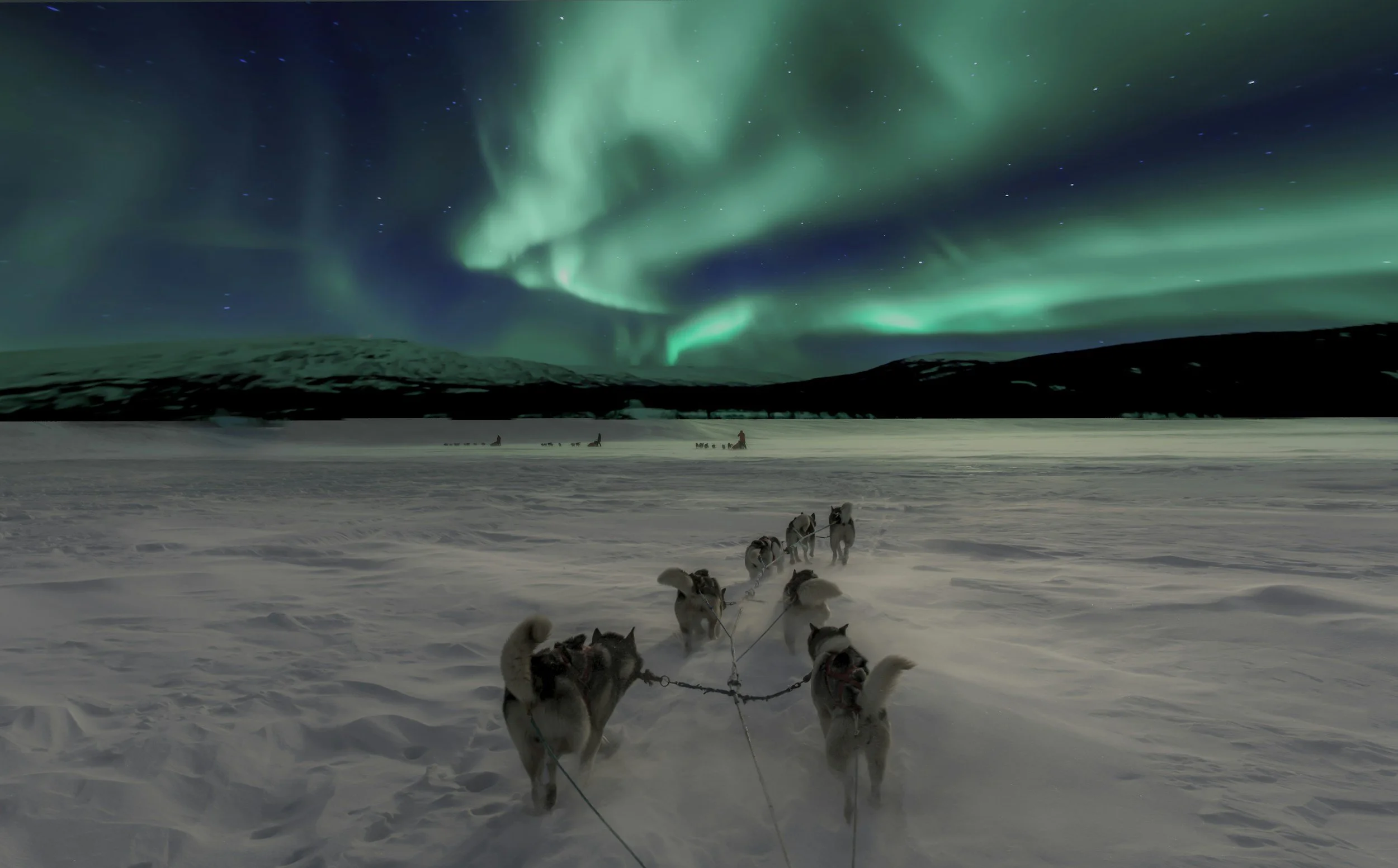
Most Northern Lights content sends couples to Reykjavik in February. Three calls, three wrong answers. Why? The aurora isn't in Reykjavik. February isn't the statistically best window. And February prices the trip 30-40% higher than the dates that deliver the same lights with better odds.
You have to go to the Arctic. Not "close to the Arctic." The Arctic. Fun fact: the aurora oval, which is where aurora borealis truly has a moment, sits around 67° magnetic latitude. Reykjavik is at 64.7°. Yes, those 2.3° matter. The properties that actually put you under the oval are in north Iceland or north Norway, and the timing math is its own conversation.
A note before we get into it: 2026 and 2027 are the back half of Solar Cycle 25, which peaked in 2024-2025. Aurora activity remains elevated through 2027, then trends down toward the next minimum in the early 2030s. This window genuinely closes. The urgency I'm about to present isn't a marketing line; it's a heliophysics calendar. Thank me later.
Iceland — The Troll Peninsula
Peak (highest prices, highest demand): Late January through mid-March. February is the cultural "Northern Lights month," and the pricing reflects it.
Shoulder (genuinely better aurora odds for the price): Late September through November.
Cusp: Early December and late March, post-holiday and pre-spring respectively.
Aurora season runs: Late August through mid-April.
Here's what most travel content gets wrong about Iceland: Reykjavik is fine for an arrival night, but it's not where you stay if you want the lights. With the capital being below the ideal magnetic latitude and carrying the light pollution of a working city, you're just not going to get the biggest bang for your buck.
On the contrary, if we move a few degrees north to the Troll Peninsula, around Akureyri, we're sitting at ~67°N magnetic latitude, inside the auroral oval, ideal. The difference is the difference between "lucky if it's a strong storm" and "visible on almost any clear, dark night with a Kp of 1 or higher." (Kp is the scale that measures geomagnetic activity, 0 to 9. The higher you go in latitude, the lower the Kp you need to see the lights. Tromsø needs a Kp of 1. London needs a 6. Latitude matters more than effort.)
The math.
A 5-night stay at Eleven Deplar Farm on the Troll Peninsula (a 13-room converted sheep farm, all-inclusive, geothermal pool aurora viewing from the property, Conde Nast Gold List, just to name a few highlights) runs roughly $17,000–$22,500 per couple in peak winter (late January-March). The same property in October or November? $13,000–$17,000. That's a $4,000-$5,500 spread per couple for what is, factually, a better statistical aurora window. (More on that in a moment.)
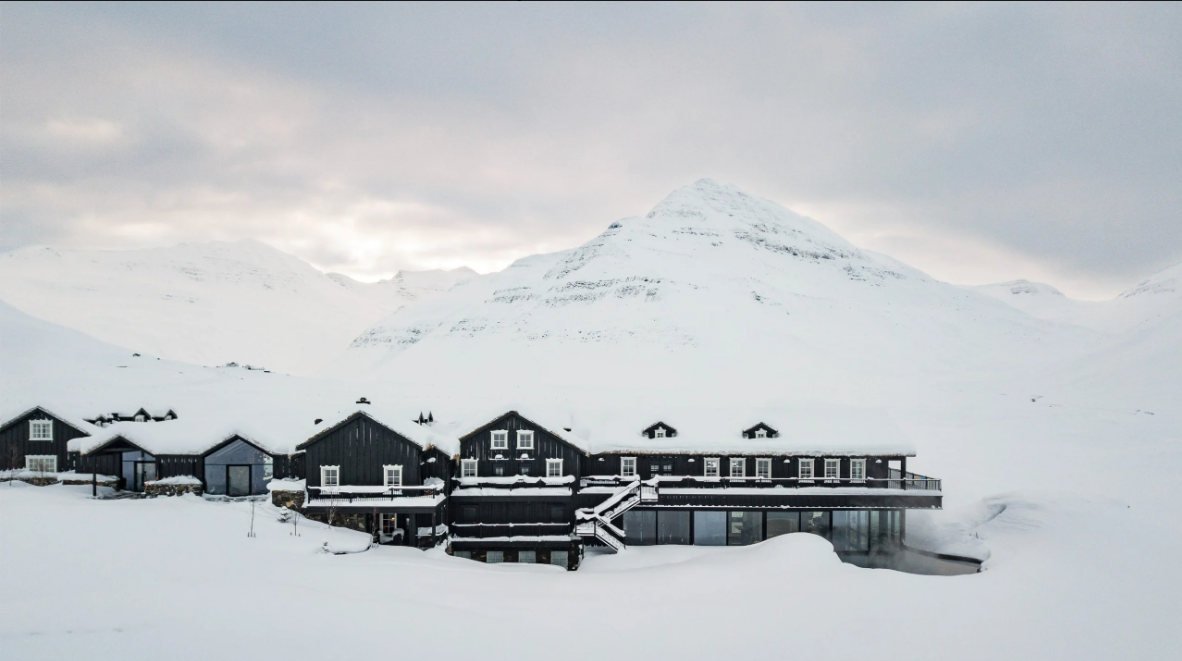
eleven deplar farm
Let's say you bookend it with one to two nights at The Reykjavik EDITION for arrival decompression and city culture. Rooms run roughly $500–$800 in shoulder, $700–$1,100 in peak. Booking with Noir & Ivory, you'll get the preferred amenities: $100 food and beverage credit (in 2026, Suite bookings actually receive an additional $100 F&B credit), daily breakfast for two, room upgrade subject to availability, early check-in or late check-out where possible. Eleven Deplar Farm is also in our network but it carries a different amenity structure given the all-inclusive model. Regardless, the advisor advantage applies at both ends of the trip.
In terms of flights, flying from East Coast US to Keflavik runs $500–$900 in shoulder, $900–$1,400 in peak. Icelandair's nonstop network makes Iceland the most accessible aurora destination in the world since it's a single flight, no European hub layover required.
What you give up. Early October can still have residual daylight that shortens the nightly aurora window. November weather is genuinely volatile. We're talking wind and storms that close roads, and Iceland's interior can be unforgiving. (The Troll Peninsula gets you to Deplar via Akureyri's domestic airport, which mitigates some of this, but cancellations happen.) If you need calendar certainty, January-February is far more predictable infrastructure even if it's not a better aurora.
What you keep. The lights. Statistically more of them, in fact. Another fun fact: the equinox effect, the way Earth's magnetic field orients toward the sun around September 22-23 and again around March 20-21, increases geomagnetic storm frequency by roughly 20-30% in those windows. October sits inside that bonus. So does late March. February doesn't. Important Consideration: most aurora content sends you to February because the nights are longest, not because the lights are best.
You also keep the rest of Iceland. October still has driveable south coast routes for day trips; the Blue Lagoon and Reykjavik's restaurant scene are full-strength; the landscape is in its color-change shoulder. November begins the deep-winter dark, but the post-October pricing benefits start to ease back up by late November as Christmas demand begins to creep in.
Norway — Lyngen and the Arctic Circle
Peak (highest prices, highest demand): Late January through March. February is the absolute top of the market, particularly around school holiday weeks.
Shoulder (the real value play): Late October through November. Also early December, before holiday demand layers in.
Aurora season runs: Late September through late March.
Norway's geography rewards going further. Tromsø sits at magnetic latitude 67.4°N. Lyngen, ~90 minutes east, is at 69.8°. Both are inside the auroral oval. Both need only Kp 1, the lowest threshold on the scale, to deliver visible aurora on a clear night. The trade-off Norway asks you to make isn't latitude. It's hotel inventory.
Here's the honest part. North Norway doesn't have the big-brand luxury inventory that Iceland's Reykjavik EDITION or Deplar Farm represent. The aurora-credible properties up there are boutique, family-owned, direct-booked. Which isn't a bad thing! Just something to note if you're the type that only sleeps at a specific brand. Lyngen Lodge is 8 rooms. Sorrisniva Arctic Wilderness Lodge in Alta is intimate by design. These aren't properties within our partnership network, which means you don't get the perks stack, no automatic $100 credit, no preferred-partner room upgrades, but you also don't need them at these locations. The properties are all-inclusive: full board, transfers from Tromsø, guided activities (dog sledding, snowmobiling, ice fishing, sea safaris), and Northern Lights presentations on-site.
The math.
A 4-night package at Lyngen Lodge includes full board, transfers from Tromsø, three guided activities across the stay, and a Northern Lights photography presentation. It runs roughly £2,435 ($3,100) per person in November shoulder, £2,880 ($3,650) per person in December-January, and £3,205 ($4,050) per person in February peak. Translated to a per-couple total: $6,200 (November), $7,300 (December-January), $8,100 (February). Add a Tromsø arrival night at Clarion Hotel The Edge at roughly $300–$500 per night.
Sorrisniva Arctic Wilderness Lodge in Alta runs slightly differently. This property has warm lodge rooms with floor-to-ceiling aurora-facing windows, the right pick; the ice/igloo hotel is a one-night novelty layer if you want it. Rates land in a similar shoulder/peak ratio: roughly $400-$700 per night for the warm lodge in shoulder, $600-$900 in peak, with their multi-activity packages adding $300-$500 per person per day.
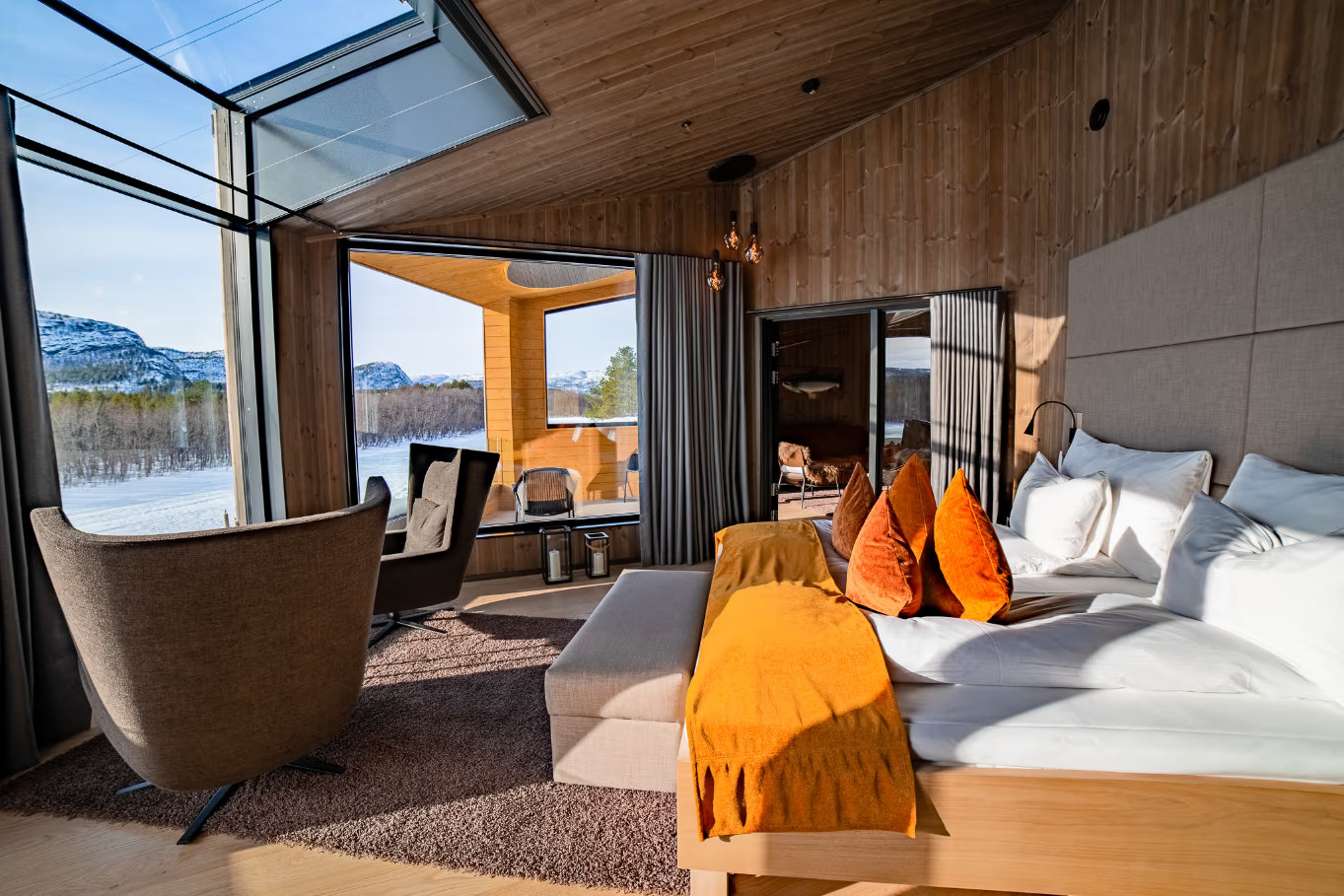
sorrisniva artic wilderness lodge
Flights to Tromsø from East Coast US run $700–$1,100 in shoulder, $1,000–$1,500 in peak. You're almost always routing through Oslo on SAS or Norwegian, which adds time but stabilizes pricing.
What you give up. Inventory choice. North Norway has fewer luxury properties than Iceland, which means availability tightens fast in peak windows. Book Lyngen Lodge or Sorrisniva 9-12 months out for February, 4-6 months out for October-November.
What you keep. A higher statistical aurora frequency than Iceland (Lyngen needs Kp 1; Reykjavik needs Kp 2-3), an all-inclusive structure that means you're not assembling activities à la carte, and a remoteness that does what Iceland doesn't: true silence, true dark, the kind of trip where you measure days by what you saw rather than what you did. The lodge model in north Norway is genuinely different from a hotel-and-tour structure. You're a guest in a small house with eight rooms. The aurora viewing happens from the deck, the jacuzzi, or your bedroom window. No tour bus required.
How to Actually Use This Information
Three principles for putting this into practice.
01. Pick the country for the trip, not the trip for the country. Iceland delivers landscape variety in a single week, south coast waterfalls, Reykjavik culture, Deplar Farm aurora, packed into a country you can cross in hours. North Norway delivers concentrated stillness from a single base, with fjord and Arctic wilderness as the backdrop. These are different vacations that happen to share the same headliner attraction. The aurora isn't the differentiator. The trip around the aurora is.
02. October and November are the value window that most couples miss. The equinox bonus makes activity statistically higher, the prices haven't yet climbed to February peak, and the infrastructure still runs at full strength. The reason you don't see this advised more often is simple: most aurora content writers haven't run the numbers. They've inherited the conventional February wisdom from a previous decade.
03. The solar cycle window matters more than the seasonal one this year. 2026-2027 is the closing chapter of Solar Cycle 25 — the period when aurora displays are at their most frequent and dramatic. After 2027, activity declines toward the next solar minimum in the early 2030s. You'll still see the lights at high latitudes during that quieter window, but the frequent, jaw-dropping displays of a solar maximum won't return until the mid-2030s. Couples who've been quietly considering this trip "someday" should know that someday has a real ceiling on the showstopper version.
When to Bring in an Advisor
If you're 6-12 months out from a Northern Lights trip, holding pricing from three sites and unsure which version is yours, that's when you bring me in. The Noir & Ivory design brief is a 21-question intake that takes about 10 minutes to complete. It's where every trip I've ever planned has started.
Frequently Asked Questions
When is the best time to see the Northern Lights for a honeymoon?
Late September through November is statistically the strongest window for couples, particularly in north Iceland (Akureyri/Troll Peninsula) or north Norway (Tromsø/Lyngen). The equinox effect around September 22-23 boosts geomagnetic activity by 20-30%, the nights are dark enough for viewing, and pricing runs 25-35% below February peak. February has the longest nights but not the highest aurora frequency.
Is Reykjavik a good base for seeing the Northern Lights?
Reykjavik works as an arrival night but isn't where serious aurora viewing happens. The city is at magnetic latitude 64.7°N with urban light pollution. For consistent viewing, base yourself in north Iceland (the Troll Peninsula or Akureyri) where magnetic latitude reaches ~67°N — inside the auroral oval, where even faint Kp 1 events produce visible aurora on clear nights.
Should I book Iceland or Norway for a Northern Lights honeymoon?
Honestly, it’s your call.
Iceland delivers landscape variety in a single trip. We’re talking waterfalls, geothermal lagoons, Reykjavik culture, and aurora-credible north Iceland properties, accessible via direct flights from the US.
Norway delivers concentrated wilderness from a single base in the Arctic Circle, with all-inclusive lodge structures and statistically higher aurora frequency at Lyngen and Tromsø.
Iceland is the variety play; Norway is the immersion play.
How much does a luxury Northern Lights honeymoon cost?
A 5-7 night luxury Northern Lights honeymoon runs roughly $18,000–$28,000 per couple in shoulder season (October-November), excluding flights. Iceland trips combining The Reykjavik EDITION and Eleven Deplar Farm land at the lower end; north Norway packages at Lyngen Lodge or Sorrisniva Arctic Wilderness Lodge run similar totals depending on activity packages and stay length. Peak February pricing adds roughly $4,000-$6,000 per couple to the same itinerary.
Will 2026 still be a good year for Northern Lights viewing?
Yes. Solar Cycle 25 peaked in 2024-2025, but elevated solar activity continues through 2026 and 2027. After 2027, activity declines toward the next solar minimum in the early 2030s — you'll still see the lights at high latitudes during that quieter window, but the frequent, dramatic displays will become rarer until the mid-2030s. This makes late 2026 through early 2027 the closing chapter of a once-in-a-decade aurora cycle.
